Your dog’s breed as a desktop pet: what makes 8 breeds look right
By Aditya Trivedi ·
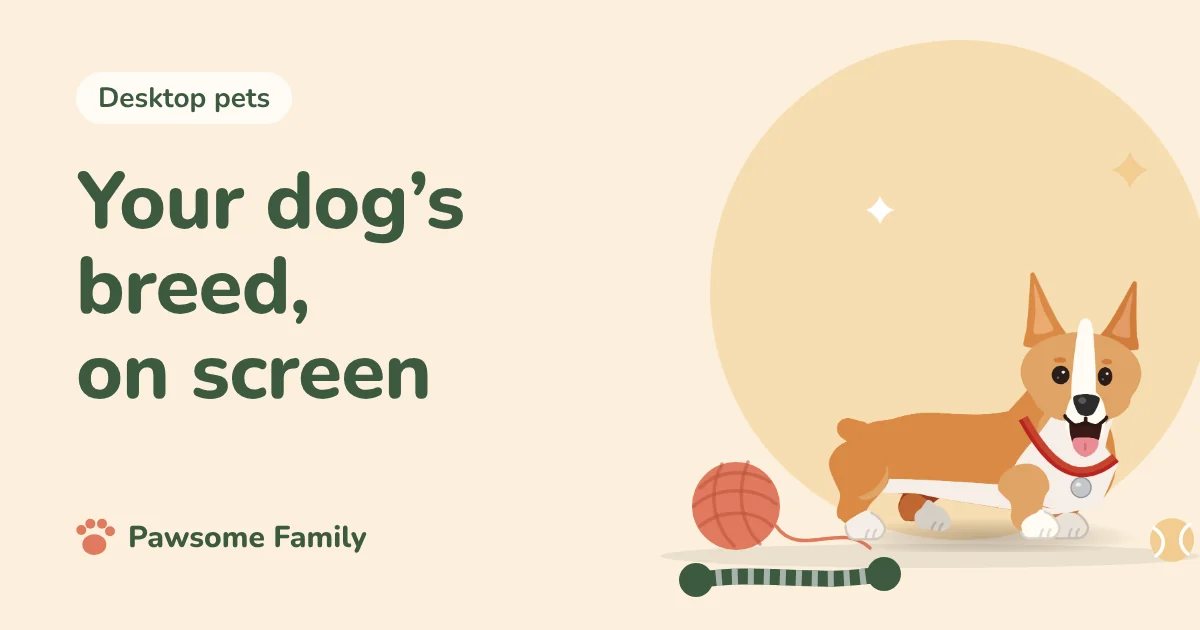
A small animated dog looks like your dog when three things are right: the outline, where the colors sit, and the face. Every breed puts the weight in a different place. A corgi is all ears and short legs. A black Labrador has one color, so the outline does all the work. A beagle needs its three colors in the right places. Here’s what matters for eight breeds, and the photo that captures it.
We make Pawsome Family, which draws a desktop pet from photos of your own dog. These notes come from our breed pages, where you can see each one walking.
The eight at a glance
| Breed | What makes it look right | The photo that matters most |
|---|---|---|
| Beagle | Black saddle, tan head, white legs, long ears, tail held high | A side view, to show all three colors at once |
| Black Labrador | The outline: broad head, floppy ears, thick tail | A side view in front of something lighter |
| Corgi | Big pointy ears, short legs, white chest on a red coat | A side view low down, at their level |
| Dachshund | A long body on short legs, floppy ears, the coat type | A full side view, nose to tail |
| German shepherd | Pointy ears, tan under a black saddle, a long tail | A side view, to show where the black starts and stops |
| Golden retriever | The exact shade of gold, floppy ears, a feathery tail | Daylight, so the shade is true |
| Husky | Grey and white coat, white mask, pointy ears, eye color | The face straight on, for the mask and eyes |
| Pug | A flat face with a dark mask, a sturdy body, a curled tail | The face straight on, and the tail from the side |
Breeds where the outline does the work
Black Labrador. One solid, glossy color means there are no markings to lean on. The broad head, the floppy ears and the thick tail are everything, so a good side view photo matters most. Take the side view in front of something lighter than your dog, or the outline disappears. See how to photograph a black dog or cat.
Dachshund. The long body on short legs is the whole joke, so the full side view, nose to tail, matters more than anything. Long-haired and wire-haired coats change the outline too, so make sure the photo shows the coat clearly.
Corgi. Ears, legs, and the white that runs up the chest and sometimes the face. Get low for the photo. From above, a corgi’s legs vanish.
Breeds where the colors do the work
Beagle. Three colors in three places: the black saddle on the back, the tan head, the white legs and tail tip. A side view shows all of them at once.
German shepherd. The black saddle varies a lot from dog to dog. Some are mostly tan, some mostly black. The side view shows where the black starts and stops.
Golden retriever. Goldens range from pale cream to deep red-gold, and most owners know their dog’s exact shade. Take the photo in daylight, not under warm indoor lights, so the color comes out true.
Breeds where the face does the work
Husky. The white mask is what people recognize, and the eyes, blue, brown, or one of each. Take the face straight on, in good light.
Pug. The flat face and the dark mask, then the tightly curled tail. Take the face, and a side view that shows the curl.
If your dog is a mix
About half the dogs in a large US study were mixed breeds, and breed guesses are often wrong. For a mix, the shape comes from your photos rather than a breed, so the side view matters even more. See your mixed-breed dog or cat as a screen pet.
If it’s not quite right
No first draw is perfect. On your pet’s page you can change the ears, tail, legs, coat, pattern, markings and eye color yourself, or add better photos and redraw. If we read the wrong breed, select Change next to Breed and type the right one.
Your dog, in every tab
Pawsome Family draws a desktop pet from 1 to 5 photos of your own dog, walking, sitting and napping along the bottom of every tab in Chrome and Edge. Have a cat too? See your cat’s coat as a screen pet.
One pet is free for 30 days, with no card needed.