Working from home with a dog or cat
By Aditya Trivedi ·
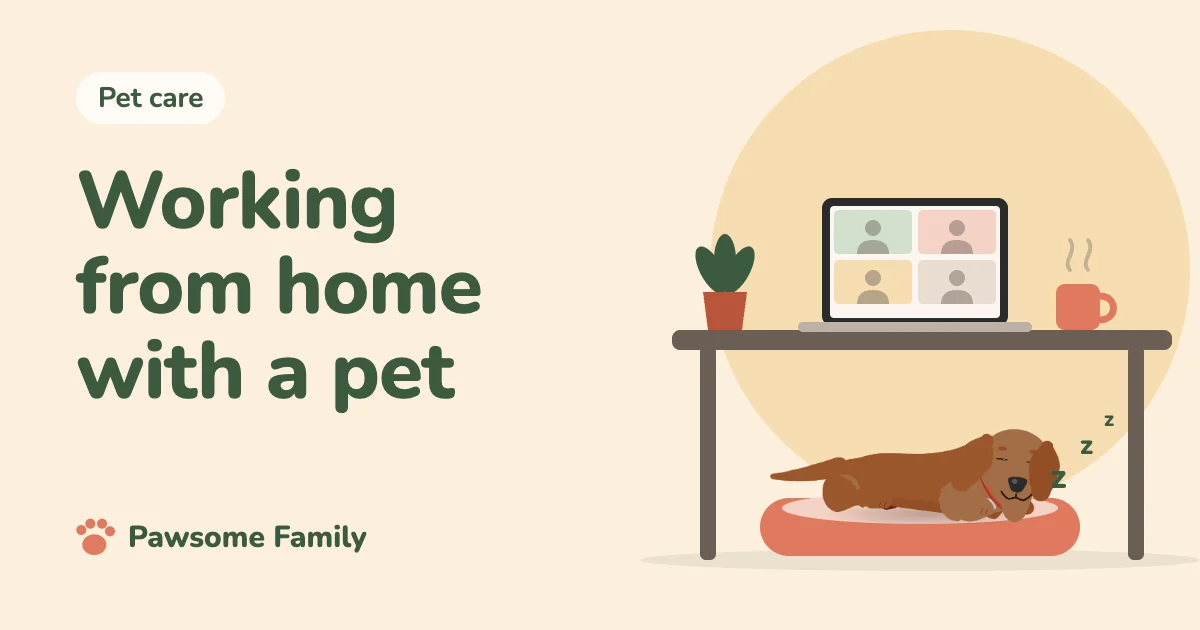
Working from home with a dog or cat goes best with a routine: exercise and play before you start, a comfortable bed near your desk, a real break at lunch, and some time every day when they are on their own. Pets settle when they know what comes next, and a pet who has been walked or played with, and fed, is far more likely to sleep through your meetings.
Here is a day that works in most homes, how to keep video calls quiet, how to make your desk safe, and how to make sure your pet still copes when you go out.
A routine that works for both of you
Before you start
- Dogs: a proper walk, with time to sniff. Following scents tires a dog’s mind as well as their legs.
- Cats: ten minutes of play with a wand toy, then breakfast. A cat who has hunted and eaten usually wants a nap.
During the morning
Give your pet a bed near your desk, but not under your feet or your chair. Add something to do: a long-lasting chew or a food puzzle for a dog, a window perch or a cardboard box for a cat. Then let them be. Talking to them every few minutes teaches them that you are on duty.
At lunch
Take a real break and spend it with them: a walk, a game in the garden or a training session. It is good for you too, and it is easy to skip when home and work are in the same room.
In the afternoon
Most pets sleep for much of the afternoon. Dogs need a chance to go out every few hours, and puppies far more often. A short play break mid-afternoon helps a restless pet settle again.
At the end of the day
Mark the end of work with something they love, such as the evening walk, dinner or a game. Closing the laptop and stepping away from the desk tells your pet, and you, that work is over.
Quieter video calls
- Walk or play before important calls. A tired pet is a quiet pet.
- Hand over a chew or a food puzzle as the call starts.
- Close the door to the room you work in, or work where your dog can’t see you talking.
- Block the view of the street if your dog barks at people passing. Close the blinds during calls, or use window film on the lower half of the glass.
- Plan for the doorbell. Deliveries set off most dogs. Leave a note on the door, or ask for a knock instead of the bell.
- Turn on noise filtering. Most video call apps have a setting in their audio options that cuts out much of a bark. Stay muted when you aren’t speaking.
If your cat likes to join meetings, a warm bed on the desk beside the laptop keeps them close but out of the camera and off the keys. Our article on why cats sit on laptops has more ideas.
A pet-safe desk
- Cables. Puppies, kittens and some adult cats chew them. Keep them out of reach, or cover them.
- Small things. Hair ties, rubber bands, paper clips and pen lids are easy to swallow. Keep them in a drawer.
- Hot drinks. A cat walking across the desk knocks over cups. Use a mug with a lid.
- Chair wheels. Check behind you before you roll back, since dogs often lie right there.
- Standing desks. Look underneath before you lower one.
Your pet still needs time alone
The biggest risk of working from home is a pet who gets used to you being there all the time, and then struggles when you go out or back to the office. Prevent it while you are still at home:
- Leave them on their own every day, even for a short time. Go for a run or to the shops without the dog, or work in another room with the door closed for an hour.
- Start small and build up. A few minutes at first, then longer, as long as they stay calm.
- Keep comings and goings low-key. A big goodbye and a bigger hello make the gap feel like an event.
Barking or howling when you leave, chewing near doors, accidents indoors or pacing are signs your pet finds being alone hard. Our guide to how long you can leave a dog or cat home alone covers these signs and what helps.
Going back to the office
Change your pet’s day slowly, over two weeks or more, before your first day back. Move walks and meals to the times they will happen on office days. Leave them alone for longer stretches. If a dog walker or sitter will be calling in, introduce them before you start, so the first visit isn’t a stranger at the door.
And if you are the one who misses them, here are small ways to keep your pet close during the workday.